Meta's 6,500-person Applied AI unit is on the verge of revolt after engineers were drafted into data-labeling work
Meta's three-month-old Applied AI group, which houses roughly 6,500 engineers and product managers, is experiencing a serious internal breakdown. A Wired investigation published June 12 found that employees describe the work as demoralizing and "literally the gulag."
What happened
The Applied AI group was assembled to generate training data for Meta's AI models. Its work centers on creating coding puzzles and synthetic examples that teach AI agents how to operate computers. The unit sits under Meta CTO Andrew Bosworth and is led by Maher Saba, per TechCrunch's reporting.
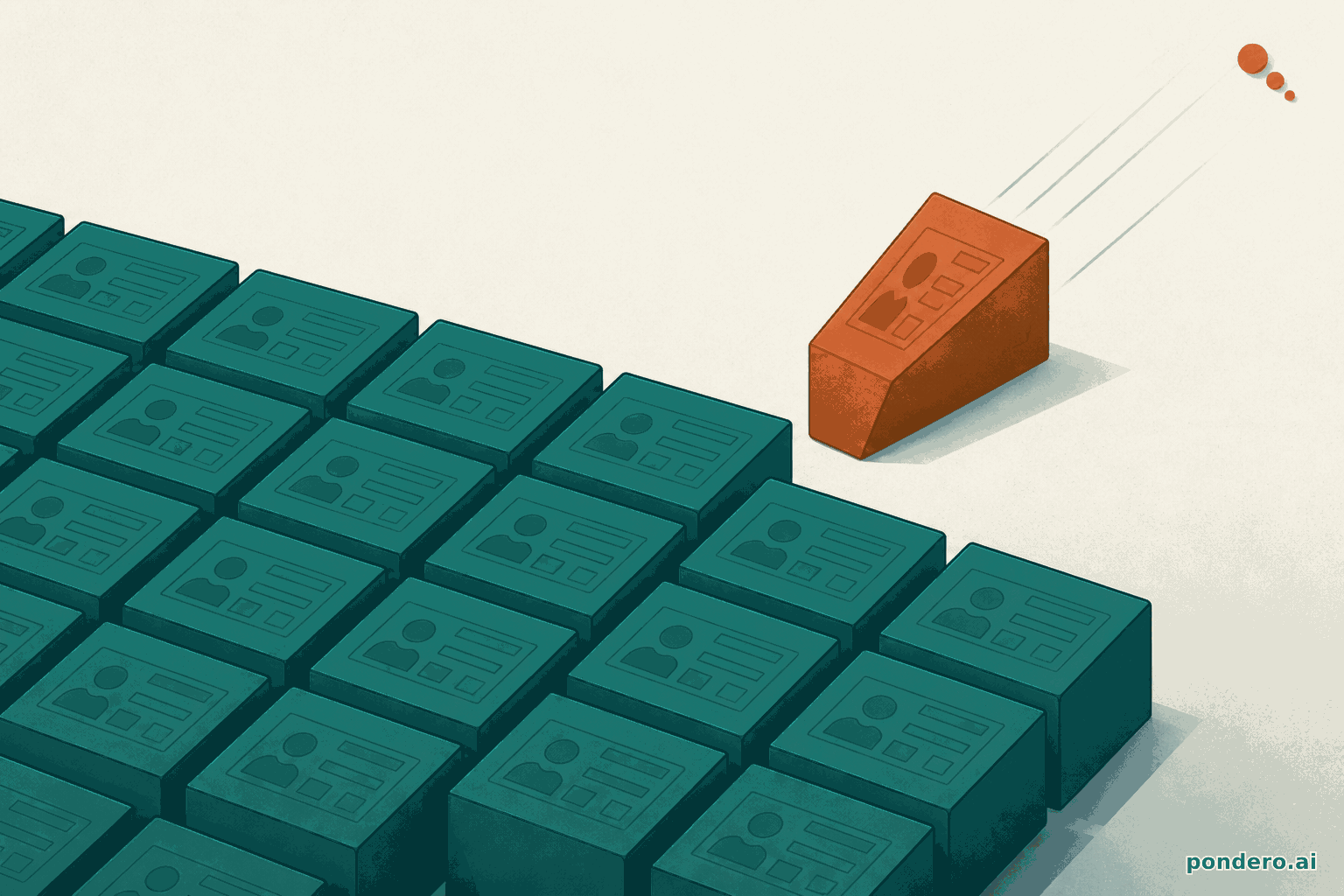
Employees told Wired they were moved into the group through a surprise email that offered them two options: join or quit. Workers began calling themselves "draftees." The initial org structure placed as many as 50 employees under a single manager, a ratio that sources described as unworkable for technical workers accustomed to smaller teams.
Tensions came to a head when someone hijacked a live internal presentation with an expletive-laden outburst directed at a senior Meta AI executive, per Wired. The incident became a symbol of a broader morale crisis inside a group that, at 6,500 headcount, is one of the largest internal AI data operations at any US technology company.
A separate sign of unrest: over 1,600 Meta employees across the company signed a petition protesting keystroke monitoring tied to AI training data collection, per TechCrunch.
Frontier training data depends on reassigned senior engineers
The Applied AI group exists because frontier AI training requires enormous volumes of high-quality human-generated data. Meta, like its peers at Google and Anthropic, needs engineers with genuine technical skill to produce the kind of nuanced coding problems and agentic task examples that commodity annotation farms cannot reliably supply.
That dependency creates a structural tension. The engineers being drafted are expensive, experienced, and hired to build products. Being reassigned to generate training puzzles feels, to many of them, like a step down. A leaked audio recording from May showed CEO Mark Zuckerberg telling employees he prefers internal staff over contractors because they have "significantly higher" intelligence. That framing, treating employees as higher-grade annotation labor, may have deepened the resentment.
The revolt at Meta also surfaces a question that will recur at every company scaling AI data operations internally: what happens to morale when skilled technical workers are involuntarily converted into training-data producers? The answer, at Meta so far, is not good.
Context
Meta's frontier AI ambitions are large. The company has publicly committed to spending $60 billion to $65 billion on capital expenditures in 2025, much of it on AI infrastructure, per Meta's own guidance. Generating enough high-quality training data to feed that infrastructure is its own distinct problem, and the Applied AI group was apparently the chosen solution.
The group's existence also reflects a broader industry shift. As AI models grow larger and more capable, synthetic data and human-generated coding tasks have become critical inputs. OpenAI, Google DeepMind, and Anthropic all run internal annotation programs, though the scale and structure of those operations are not publicly disclosed. Meta's Applied AI situation is notable partly because it became public at all, through named sources and leaked audio, rather than remaining inside the company.
What to watch next
Whether Meta adjusts the structure, compensation, or scope of the Applied AI group following the Wired report is the immediate question. A formal policy change or voluntary departure wave would both be telling signals. Longer term, whether other large labs face similar friction as they scale internal data-labeling workforces is worth tracking. The pattern of involuntary reassignment that generated resentment at Meta could repeat at any organization trying to produce training data at speed without bringing in external contractors.
Sources
- Inside Meta's AI Team Revolt - Wired, June 12 2026 (primary)
- Meta's months-old AI unit is a soul-crushing gulag, say the engineers stuck inside it - TechCrunch, June 12 2026 (secondary)