House bill would freeze AI data center construction until Congress sets national safeguards
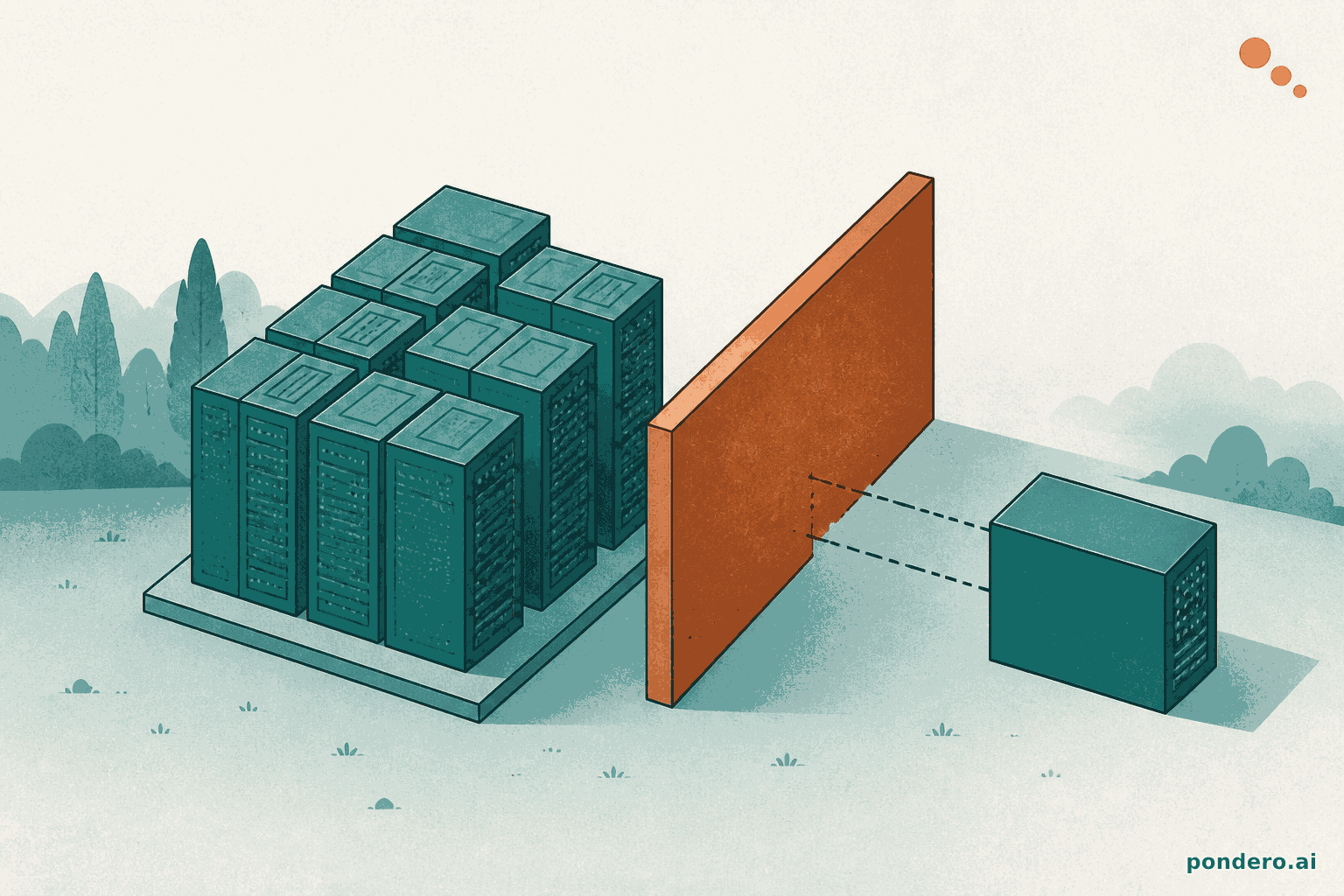
Within eight days of each other, two federal bodies pulled U.S. data center policy in opposite directions. On June 18, FERC voted 5-0 to order the six major grid operators to fast-track AI data center connections. On June 25, Rep. Alexandria Ocasio-Cortez introduced the House version of the AI Data Center Moratorium Act, which would halt all new construction and expansion nationwide. Together the two actions mark the opening boundary stakes of a federal fight that AI operators and hyperscalers now face as a documented, citable political risk alongside every multi-year campus expansion plan.
What
No new AI data center construction could begin, and no existing facility could expand, until Congress passes what the legislation terms "strong national safeguards," per Ocasio-Cortez's House press release. Those safeguards must guarantee AI product safety for consumers and workers, ensure workers share in AI's economic gains, and prevent data center operations from driving up electricity prices or causing environmental harm.
The bill carries two additional provisions with direct operator exposure. First, it bans U.S. exports of AI computing infrastructure to countries that lack equivalent safety and environmental laws. Second, covered facilities face new reporting requirements on water and energy usage, wastewater discharge, financial structures, and worker wages. Ocasio-Cortez filed the House version with nine co-sponsors per Contracosta News, completing a bicameral pair with Sen. Bernie Sanders' Senate companion from March 25. Sanders cited more than 100 local communities that have enacted their own data center moratoriums and 12 states advancing statewide proposals, per his Senate press release.
Data center expansions now carry a citable federal political risk
Passage odds are long. Republicans control both chambers and the Trump administration has backed AI infrastructure expansion explicitly. Still, formal bicameral legislation is a different instrument than advocacy letters or state resolutions. The FERC order and the moratorium bill now exist in parallel in the federal record, giving opposing lobbying coalitions a statutory foothold on each side. AI operators and hyperscalers planning multi-year campus expansions face a documented, citable federal political risk alongside the grid and permitting hurdles that already complicate large-facility development.
What to watch next
A committee referral would be the first signal that leadership is willing to move the bill forward. On the corporate side, Microsoft, Google, Amazon, and Meta have each announced multi-billion-dollar U.S. data center commitments; their lobbying responses will indicate how seriously they read the legislation as a threat. A Senate floor vote on the Sanders companion bill, even a failed one, would reveal the measure's actual support count in the upper chamber.
For operators, the practical upshot is simple: site-selection and capital-allocation decisions made today should include a federal moratorium scenario in their risk models.
Sources
- Sanders, Ocasio-Cortez Announce AI Data Center Moratorium Act - primary: Senator Sanders Senate press release, March 25, 2026
- Ocasio-Cortez Introduces House Version of the AI Data Center Moratorium Act - primary: Rep. Ocasio-Cortez House press release, June 25, 2026
- Ocasio-Cortez Introduces House Version of the AI Data Center Moratorium Act - secondary: Contracosta News, June 25, 2026